
How to Buy Sarees Wholesale from Surat: A Complete Guide for Retailers
- Aqsa wholesale
- Nov 30, 2025
- 4 min read

If you’re looking to source sarees at wholesale price, whether for your boutique, online store, or resale business — buying from Surat (Gujarat) remains one of the smartest moves you can make. Surat is often called the “textile hub” of India for good reason: thousands of factories and hundreds of wholesale suppliers operate here, offering a huge variety in fabrics, designs, and price ranges.
In this article, we cover everything you need — from evaluating suppliers to placing orders, negotiating, and managing quality — so you get the best value with minimal risk.
Why Surat? What Makes It Ideal for Wholesale Sarees

Massive textile infrastructure & variety: Surat is a powerhouse in fabric production — from synthetic materials like georgette, crepe, chiffon to dress materials and sarees — thanks to its extensive textile factories and dyeing/finishing units. This lets buyers access a wide range of sarees: from affordable everyday wear to premium pieces.
Factory-direct pricing & better margins: Buying directly from suppliers in Surat (or wholesale factories) helps skip middlemen, giving you more favorable wholesale rates and better profit margins.
Flexibility & supply-chain scale: Because the industry in Surat is so large, there are many suppliers. You can order small batches (test first) or large bulk orders — depending on your needs.
Suitable for resale, export or retail buyers: Whether you run a small boutique, an e-commerce store, or want to export, Surat’s wholesale ecosystem supports different business models.
Step-by-Step: How to Buy Wholesale Sarees from Surat
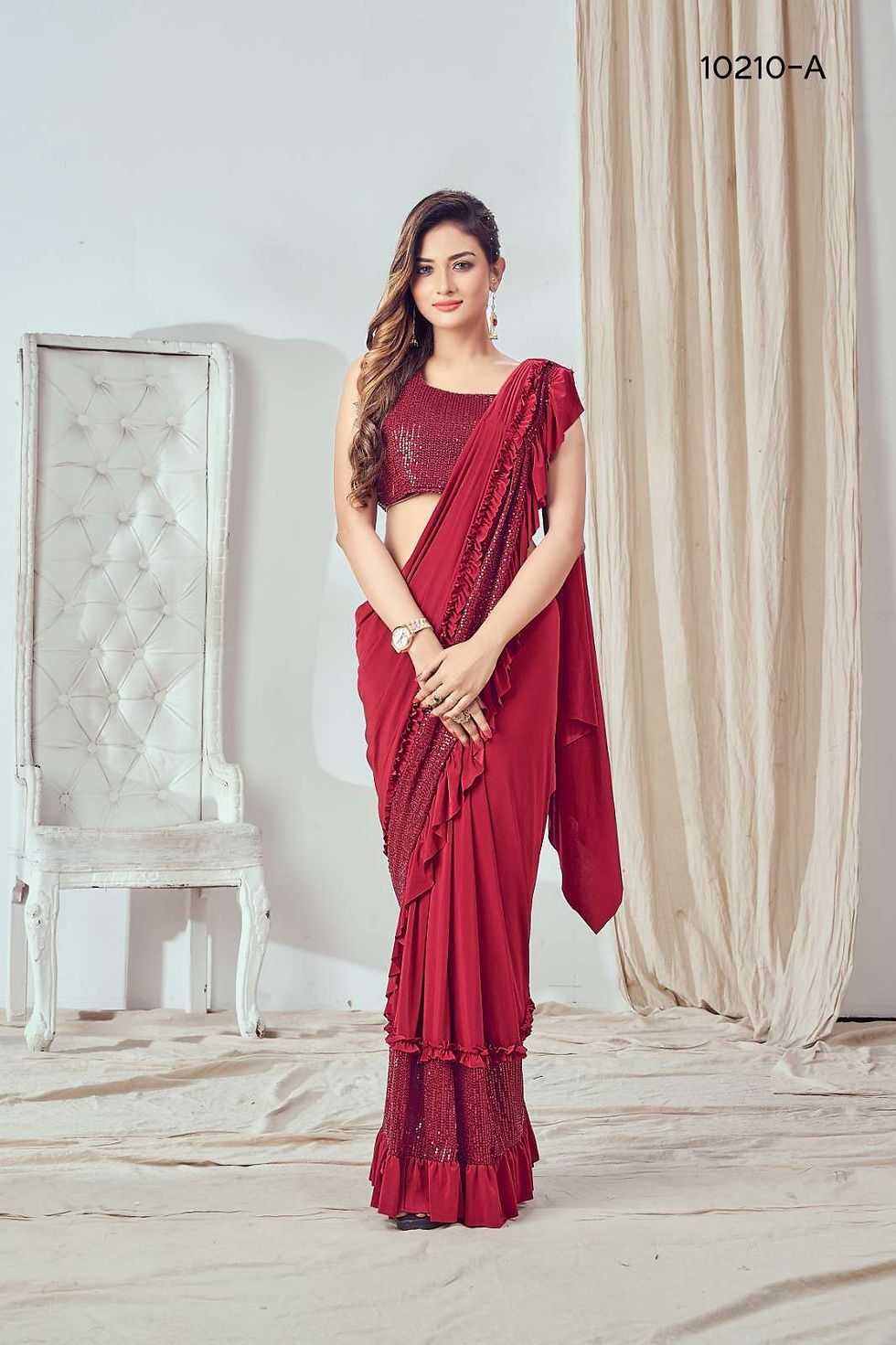
1. Shortlist Reliable Suppliers / Wholesalers
Look for suppliers who have good reputation — manufacturing background, transparent catalogues, and preferably GST/compliance paperwork (important for large orders or export).
Prefer suppliers who allow small “trial orders” before you commit large bulk — many wholesalers recommend starting small (say 50–100 pieces) first.
If possible, visit supplier/showroom in person (or have someone trusted visit). This helps you verify fabric quality, finishing, color accuracy, stitching, packaging etc.
2. Decide What You Want: Fabric Type, Saree Style, MOQ & Budget

Before ordering, clarify:
What kind of sarees: daily wear, party wear, printed, chiffon, silk, synthetic, etc.
Approximate order size (MOQ) depending on your budget and demand forecast.
Budget per piece vs expected retail price — helps set margins.
Delivery timelines, shipping costs (if shipping to another city), packaging quality (important for re-sellers).
3. Request a Sample or Small Batch First

Always try ordering a small batch or sample first (if possible) — helps you evaluate quality, finish, and buyer demand without large investment. Many suppliers expect this approach.
Check for consistency — fabric texture, color quality, stitching/printing, finishing — before placing a big order.
4. Negotiate Price, Payment Terms, and Order Minimums

Since Surat market has many suppliers:
You can negotiate better rates if you order in bulk or commit to repeat orders.
Ask for clarity on minimum order quantities (MOQ), discounts for bulk orders, and whether payment is upfront or after delivery.
For long-term supply — building a relationship with wholesalers helps secure better deals, especially in peak seasons.
5. Plan Timing & Order Early (Especially for Festivals/Seasonal Demand)

Many wholesalers advise placing your orders well ahead (especially before festivals or wedding season) — because demand & lead times increase drastically.
This ensures you get enough inventory, avoid price hikes, and have time for quality checks / replacements if any issue arises.
6. Verify Quality, Packaging & Shipment (Especially If Buying Online / From Far)

If you can’t inspect in person, ask clear photos (under natural light), zoom-ins on fabric, stitching, borders.
Check how the sarees are packed (folded, wrapped, tagged) — important to avoid damage during transit.
If shipping across states, ensure supplier uses reliable courier/shipping services with tracking (especially for bulk orders).
7. Diversify Suppliers & Keep Balanced Inventory

Don't rely on a single supplier or fabric type. Source from 2–3 reliable wholesalers to ensure diversity (cotton, chiffon, silk, synthetic) and minimize risk of shortages.
Maintain a mix of staple stock (budget/daily wear) and premium/designer pieces (for higher-margin customers).
8. Keep Clear Records: Pricing, Purchase Invoices, GST / Compliance (If Applicable)

For larger transactions — especially for resale or export — maintain invoices, GST bills (if applicable), and records of payment/shipping.
Good record-keeping helps in business credibility, returns/quality issues, and avoids legal hassles (taxes, distribution regulations).
Checklist Before You Hit “Place Order”
✅ What to Check | 💡 Why It Matters |
Supplier reputation & reviews | Avoid bad suppliers/frauds — ensures quality and trustworthy transactions |
MOQ vs budget vs predicted demand | Helps avoid overstocking or understocking |
Sample check (fabric, stitch, finishing, print) | Ensures product quality before bulk commit |
Payment & shipping terms | Avoid payment issues & ensure timely delivery |
Packaging & labeling | Prevent damage in transit; professional presentation for resale |
Diversity of stock/fabrics | Cater to full customer range (budget to premium) |
Proper documentation (invoice, GST) | For legal compliance, accounting, returns or resale auditing |
Common Mistakes to Avoid

Ordering large volume on first purchase without sample check — risk: unsellable stock.
Depending on a single supplier — risk: stock shortage, delay, or quality inconsistency.
Delaying orders until peak demand (festivals, weddings) — risk: increased prices, limited stock.
Ignoring packaging, shipping conditions — risk: damaged goods, returns, unhappy customers.
Not checking market demand/target customer preferences — risk: low sales, inventory pile-up.
Final Thoughts & Recommendations

Buying wholesale sarees from Surat can be highly profitable if approached with caution, research, and strategy. The key is to start small, test quality and demand, build reliable supplier relationships, and diversify your stock. Over time, this approach helps you scale — maintain a mix of everyday wear, party wear, premium sarees, and trending designs — giving you flexibility and steady cash flow.
If you are serious: treat your first few orders as experiments. Once you understand supplier reliability, product quality, and market demand - you can confidently expand.


Comments